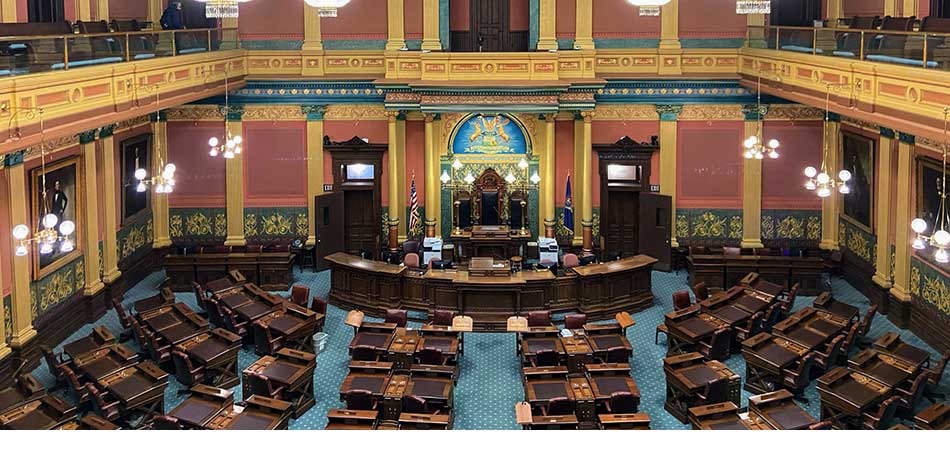

In an extremely rare move, the House Appropriations Committee voted to cancel almost $645 million in ongoing funding to various work projects throughout state government. The projects were all approved during the FY25 budget process and received appropriations. Work projects are multi-year projects vs. a standard one-year project appropriation. As part of the process, the State Budget Office provided a list of ongoing work projects to both Appropriations Committees. If neither committee took any action, the previously approved projects would have continued. However, unlike every other action taken by the legislature, it only takes one of the committees to cancel some or all of the ongoing work projects. While the process the committee took is allowed under a 1984 law, it has never been used on a large scale. At a press conference, Representative Will Snyder (D-Muskegon) stated he intends to introduce legislation to change the law to ensure both chambers must approve cancelling work projects.
The work projects cancelled include:
-
- $2.1 million for education improvements at the Department of Corrections
- $15 million for the Clean Michigan Initiative
- Over $18 million for prenatal and infant support programs
- $3.5 million for Native American Health Services
- $1.8 million for firearm safety and violence prevention
- Over $102 million in community enhancement grants
- $50 million for the Indigent Defense Commission
- Over $11 million for the Michigan Innovation Fund
- Nearly $160 million for the Make it in Michigan Competitiveness Fund
- $368,600 for the Michigan Veterans Facility Ombudsman
While the House Republican Caucus has stated this is part of their plan to cut “waste, fraud, and abuse” from state government, the House Democratic Caucus held a press conference in strong opposition to this move. Yesterday’s hearing deepened the rift in what was already a precarious relationship between the caucuses.
Please click here for the full list of work projects.
As of Friday morning, there remain a lot of questions and uncertainty. Neither the House, the Senate, nor the administration has a full list of every program that will see its funding removed. Additionally, they don’t know the exact amount, as some programs have already spent a portion of appropriated funds.